- Overview
- What is EPR for Used Oil?
- Who Needs EPR Registration for Used Oil?
- Regulations & Legal Framework
- Certification Process
- Documents Required
- Fees & Cost Structure
- Benefits of EPR Certification for Used Oil
- How SS Global Services Helps
- Frequently Asked Questions (FAQ)
Overview
Used oil is a hazardous by-product generated from automobiles, industrial machinery, generators, and manufacturing processes. If not managed properly, used oil can cause severe soil contamination, water pollution, and long-term environmental damage. Recognizing these risks, the Government of India has brought used oil under the Extended Producer Responsibility (EPR) framework to ensure its safe collection, recycling, and environmentally sound disposal.
EPR for Used Oil makes businesses accountable for the end-of-life management of the oil they place in the Indian market. Under this system, producers and importers of base oil and lubrication oil are required to collect used oil and ensure it is recycled only through authorized recyclers. The framework promotes responsible waste handling while preventing illegal dumping, burning, or reuse that can harm public health and the environment.
The implementation and monitoring of EPR for used oil is carried out by the Central Pollution Control Board (CPCB) through a centralized online portal. This ensures transparency, traceability, and strict compliance with environmental norms. Businesses that fall under the EPR obligation must register, meet prescribed targets, and submit regular compliance reports to remain legally authorized.
For companies dealing in lubrication oil, base oil, or related products, EPR registration is no longer optional. It is a critical compliance requirement that not only avoids penalties but also supports sustainable waste management and strengthens corporate environmental responsibility in India’s evolving regulatory landscape.
Apply for EPR RegistrationWhat is EPR for Used Oil?
Extended Producer Responsibility (EPR) for Used Oil is a regulatory mechanism that places the responsibility of managing waste oil on the entities that introduce oil into the Indian market. Under this framework, producers and importers of base oil and lubrication oil are required to ensure that the used oil generated from their products is collected, channelized, and recycled in an environmentally safe manner
The objective of EPR for used oil is to prevent unsafe practices such as illegal dumping, open burning, or reuse of contaminated oil, which can severely harm soil, water bodies, and human health. Instead, the framework promotes authorized recycling and re-refining, allowing valuable resources to be recovered while minimizing environmental damage.
EPR compliance for used oil is implemented through a centralized digital system managed by the Central Pollution Control Board (CPCB). Obligated entities must register on the CPCB portal, declare the quantity of oil placed in the market, meet prescribed EPR targets, and ensure that used oil is handed over only to CPCB-authorized recyclers.
In simple terms, EPR for used oil ensures that businesses remain accountable for the entire lifecycle of the oil they sell—from market placement to end-of-life recycling—while supporting India’s move toward sustainable waste management and a circular economy.
Get Service NowWho Needs EPR Registration for Used Oil?
EPR registration for used oil is mandatory for all entities that place oil in the Indian market or are involved in its collection and recycling. The objective is to ensure that used oil is tracked, collected, and recycled responsibly, preventing unsafe disposal and environmental damage. As per CPCB guidelines, the following stakeholders are required to obtain EPR registration:
- Producers (Manufacturers & Importers of Base Oil/Lubrication Oil):
Any company that manufactures or imports base oil or lubrication oil in India is obligated to register under EPR. Producers are responsible for meeting prescribed EPR targets based on their sales or import volumes and must ensure compliance through authorized recycling channels.
- Used Oil Importers:
Entities importing used oil into India for recycling or re-refining must obtain EPR registration. These importers are required to ensure 100% recycling of the imported quantity through CPCB-authorized recyclers and report the same on the official portal.
- Used Oil Recyclers:
Businesses engaged in recycling or re-refining used oil must register with the Central Pollution Control Board (CPCB) to legally operate. Recyclers play a critical role by generating EPR certificates, which are used by producers and importers to meet their compliance obligations.
- Collection Agents (Where Applicable):
Authorized collection agents involved in aggregating used oil from various sources must also register, ensuring proper channelization to registered recyclers and maintaining traceability within the EPR system.
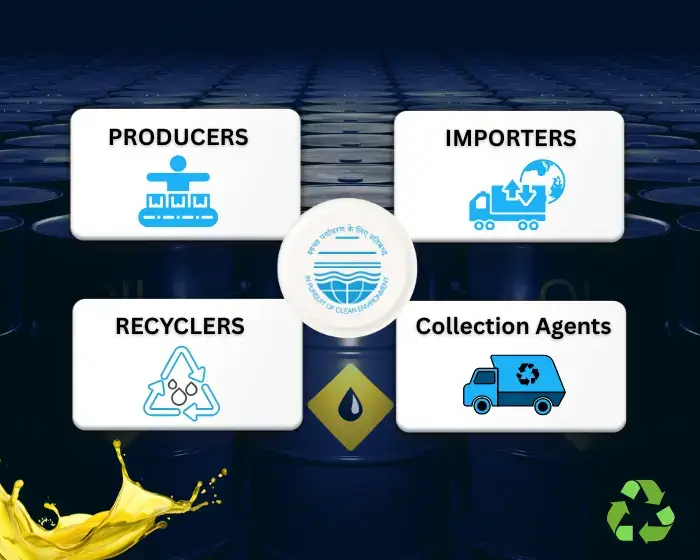
In simple terms, any entity that introduces oil into the market or handles used oil as part of its business operations must comply with EPR requirements. Registration not only ensures legal authorization but also supports transparent, environmentally sound management of used oil across India.
Regulations & Legal Framework
The management of used oil in India is regulated under a clear legal framework designed to protect the environment and public health. To prevent unsafe disposal and misuse of hazardous oil waste, the Government of India has brought used oil under the Extended Producer Responsibility (EPR) system.
EPR for used oil is governed by the Hazardous and Other Wastes (Management and Transboundary Movement) Rules, 2016, along with the Second Amendment Rules, 2023 , which officially introduced EPR obligations for used oil. These regulations became effective from 1 April 2024 , making EPR registration mandatory for all entities involved in the production, import, recycling, or collection of used oil.
The entire EPR framework is implemented and monitored by the Central Pollution Control Board (CPCB) under the Ministry of Environment, Forest and Climate Change (MoEFCC). CPCB manages a centralized online portal where all obligated entities must register, submit compliance data, meet assigned EPR targets, and track recycling activities through authorized recyclers.
These regulations clearly define the responsibilities of each stakeholder and ensure transparency through digital reporting and verification. Non-compliance, incorrect data submission, or failure to meet EPR targets can result in environmental compensation and penalties. Overall, this legal framework ensures that used oil is recycled responsibly, illegal disposal is prevented, and businesses operate in line with India’s environmental sustainability goals.
Process of EPR Registration for Used Oil
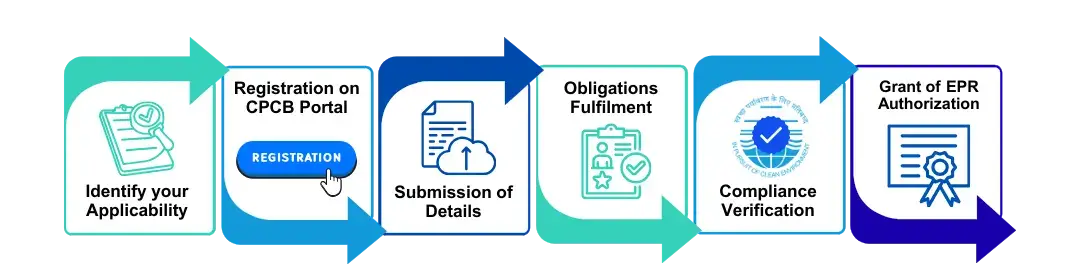
Registering for EPR for Used Oil is a structured but straightforward process when done correctly. The entire registration and compliance workflow is managed online through the portal operated by the Central Pollution Control Board (CPCB). The system is designed to track used oil movement and ensure it is recycled only through authorized channels.
- 1. Identify Your Applicability
Determine whether you fall under the category of producer, importer, recycler, or collection agent as per the Used Oil EPR framework.
- 2. Registration on CPCB EPR Portal
Register on the CPCB Used Oil EPR portal by submitting basic company and authorized signatory details.
- 3. Submission of Operational Details
Declare sales, import, recycling, or collection data as applicable, which is used by CPCB to determine EPR obligations and targets.
- 4. Fulfilment of EPR Obligations
Meet assigned EPR targets by purchasing EPR certificates generated by CPCB-authorized used oil recyclers through the portal.
- 5. Portal Review & Compliance Verification
All submitted details and transactions are digitally reviewed and validated by CPCB for compliance accuracy.
- 6. Grant of EPR Authorization
Upon successful verification, CPCB issues the official EPR Registration Certificate authorizing lawful operations under Used Oil EPR.
Step-by-Step Registration Process:
Why the Process Matters
This structured process ensures complete transparency, prevents illegal disposal of used oil, and promotes authorized recycling across India. When handled correctly, EPR registration not only keeps businesses compliant but also supports sustainable resource recovery and environmental protection.
Documents Required for EPR Used Oil Registration
To obtain EPR registration for used oil, applicants must submit a set of documents that verify their legal identity, business operations, and compliance capability. The exact documents may vary slightly depending on whether the applicant is a producer, importer, recycler, or collection agent, but the core requirements remain consistent as per CPCB guidelines.
- Business Registration Proof:
Certificate of Incorporation / Partnership Deed / Proprietorship Registration.
- Company Identification Documents:
PAN Card, GST Registration Certificate required for business identification and verification on the CPCB EPR portal.
- Authorized Signatory Documents:
PAN Card and Aadhaar Card of the authorized person.
- Authorization Letter:
Authorizing the signatory to apply on behalf of the company.
- Import–Export Code (IEC):
Mandatory for importers of base oil, lubrication oil, or used oil.
- Sales / Import Data of Oil:
Details of base oil or lubrication oil placed in the Indian market (for producers/importers).
- Used Oil Handling Details:
Quantity of used oil collected or recycled (for recyclers / collection agents).
- EPR Compliance Declaration:
Declaration related to fulfilment of EPR obligations as required on the CPCB portal.
Key Documents Required:

Important Note: All documents must be accurate, updated, and consistent with CPCB records. Any mismatch or incomplete information can lead to delays or rejection of the EPR application.
At SS Global Services, we ensure all documents are properly prepared, verified, and uploaded as per CPCB requirements—so your EPR Used Oil Registration is completed smoothly without unnecessary follow-ups.
EPR Targets & Compliance Obligations
Under the EPR framework for used oil, registered entities are required to meet specific collection and recycling targets as assigned by CPCB. These targets are calculated based on the quantity of base oil or lubrication oil placed in the Indian market by producers and importers.
Instead of managing physical collection themselves, businesses fulfill their EPR obligations by purchasing EPR certificates generated by CPCB-authorized used oil recyclers. Each certificate represents a verified quantity of used oil that has been recycled through approved channels.
To remain compliant, entities must also submit periodic returns on the CPCB portal, reporting sales or import data and EPR certificate usage. Maintaining accurate records and timely reporting is essential, as failure to meet targets or file returns may lead to penalties or environmental compensation.
Meeting EPR targets on time ensures uninterrupted operations, legal compliance, and responsible used oil management.
Fees & Cost Structure
The fees for EPR Registration for Used Oil are prescribed by CPCB and vary based on the category of the applicant and the quantity of oil handled or placed in the market. These charges cover registration and fulfillment through the CPCB portal.
The detailed and latest fee structure applicable under Used Oil EPR is provided in the tables below for easy reference:
Registration Fee for Producers
| Sr No. | Sale of Base Oil/Lubrication Oil (MTPA) | Registration Fees Amount (INR) |
|---|---|---|
| 1 | > 1,00,000 MT | 10,00,000 |
| 2 | > 50,000 - 1,00,000 MT | 5,00,000 |
| 3 | > 10,000 - 50,000 MT | 2,00,000 |
| 4 | 5,000 - 10,000 MT | 50,000 |
| 5 | < 5,000 MT | 25,000 |
Registration Fee for Used Oil Importers
| Sr No. | Quantity of Used Oil Imported (MTPA) | Registration Fees Amount (INR) |
|---|---|---|
| 1 | > 1,00,000 MT | 10,00,000 |
| 2 | > 50,000 - 1,00,000 MT | 5,00,000 |
| 3 | > 10,000 - 50,000 MT | 2,00,000 |
| 4 | > 1,000 - 10,000 MT | 1,00,000 |
| 5 | 500 - 1,000 MT | 50,000 |
| 6 | < 500 MT | 25,000 |
Registration Fee for Recyclers
| Sr No. | Capacity of the Recycling Facility (MTPA) | Registration Fees Amount (INR) |
|---|---|---|
| 1 | > 20,000 MT | 75,000 |
| 2 | > 10,000 - 20,000 MT | 50,000 |
| 3 | 5,000 - 10,000 MT | 35,000 |
| 4 | < 5,000 MT | 25,000 |
Registration Fee for Collection Agents
| Sr No. | Capacity of the Collection Facility (MTPA) | Registration Fees Amount (INR) |
|---|---|---|
| 1 | > 10,000 MT | 10,000 |
| 2 | > 5,000 - 10,000 MT | 5,000 |
| 3 | > 2,000 - 5,000 MT | 2,000 |
| 4 | 500 - 2,000 MT | 1,000 |
| 5 | < 500 MT | 500 |
Note: The annual processing charge is 25% of the application fees in the respective category.
Penalties & Environmental Compensation
Non-compliance with EPR requirements for used oil can lead to strict action by the Central Pollution Control Board (CPCB). The regulatory framework is designed to ensure accountability and prevent illegal disposal or misuse of used oil.
Businesses that fail to register, do not meet assigned EPR targets, submit incorrect data, or delay periodic returns may be liable to pay Environmental Compensation (EC). The amount of compensation is calculated based on the extent of non-compliance, quantity of oil involved, and the duration of default.
In serious or repeated cases, CPCB may also impose additional penalties, suspend EPR permissions, or restrict business operations until compliance is restored. Timely registration, accurate reporting, and regular fulfilment of EPR obligations are therefore essential to avoid financial loss and regulatory disruption.
Maintaining continuous compliance not only protects businesses from penalties but also supports responsible used oil management and environmental protection.
Benefits of EPR Registration for Used Oil
EPR registration for used oil is not just a regulatory requirement—it offers clear, long-term advantages for businesses operating in India.
Key Benefits of EPR Used Oil Certification:
- Legal & Regulatory Compliance:
EPR authorization allows producers, importers, recyclers, and collection agents to operate without regulatory risk. It ensures alignment with CPCB guidelines and helps businesses avoid penalties, environmental compensation, or operational restrictions.
- Environmentally Responsible Operations:
By complying with EPR targets, businesses contribute to safe collection and scientific recycling of used oil. This reduces soil and water contamination, prevents illegal disposal, and supports India’s circular economy goals.
- Improved Business Credibility:
EPR-compliant companies are viewed as responsible and trustworthy by regulators, clients, and partners. This strengthens brand reputation and builds confidence among stakeholders.
- Smooth & Transparent Compliance:
The EPR framework brings clarity through digital tracking of targets, certificates, and returns. Businesses benefit from a structured system that simplifies compliance monitoring and reporting.
- Long-Term Business Sustainability:
Responsible used oil management reduces compliance uncertainty and supports stable, uninterrupted business growth in a regulated market.

Responsibilities of Stakeholders Under Used Oil EPR
The EPR framework for used oil places clear responsibilities on all stakeholders involved, ensuring that used oil is collected, handled, and recycled through authorized channels. Each stakeholder plays a defined role in maintaining compliance and protecting the environment.
- Producers and Importers: Producers and Importers are responsible for ensuring that the used oil generated from the products they place in the market is recycled in line with CPCB targets. They must regularly purchase EPR certificates from authorized recyclers and submit accurate data through the CPCB portal.
- Used Oil Recyclers: Used Oil Recyclers are required to process collected used oil in an environmentally sound manner and generate EPR certificates only for verified quantities. Proper record maintenance and compliance with CPCB-approved recycling standards are mandatory.
- Collection Agents and Handlers: Collection Agents and Handlers must ensure safe storage, transportation, and transfer of used oil to authorized recyclers. All movements must be traceable and reported as per CPCB norms.
By fulfilling these responsibilities, stakeholders ensure smooth compliance, avoid penalties, and contribute to a sustainable and regulated used oil recycling ecosystem in India.
How SS Global Services Helps with EPR Compliance for Used Oil
With more than a decade of experience in EPR and regulatory compliance, SS Global Services has supported manufacturers and importers across India with reliable CPCB approvals. Our practical understanding of environmental regulations, documentation requirements, and portal-based compliance enables businesses to achieve smooth registration, timely approvals, and long-term EPR compliance without unnecessary delays.
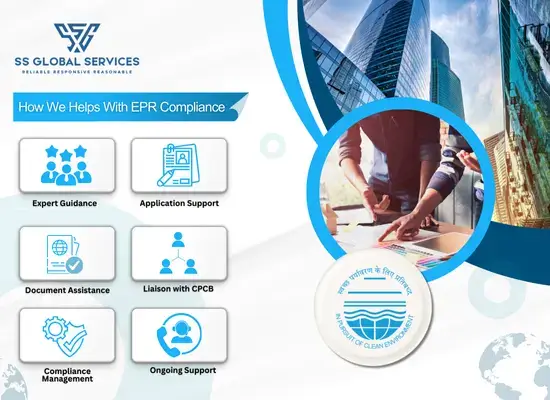
- Expert Guidance: Our compliance experts assess your business obligations and guide you through the correct EPR pathway, ensuring clarity from the very first step.
- Application Support: We handle complete CPCB portal registration and application filing, ensuring accurate submissions and reducing the risk of rejection or delays.
- Document Assistance: From preparing mandatory documents to verifying compliance details, we ensure all paperwork meets CPCB requirements before submission.
- Liaison with CPCB: Our team coordinates directly with CPCB authorities for clarifications, updates, and approvals—saving you time and unnecessary follow-ups.
- Compliance Management: We assist in managing EPR targets, returns, and certificate utilization to ensure your business stays fully compliant throughout the year.
- Ongoing Support: Even after registration, we provide continuous compliance support, regulatory updates, and assistance with renewals and reporting.
Frequently Asked Questions (FAQs)
EPR Registration for Used Oil often raises important compliance-related questions for producers, importers, recyclers, and collection agents. Below are the most commonly asked questions to help you understand the legal requirements, responsibilities, and compliance process under the EPR framework in India.
Our Top Services
At SS Global Services, we offer a complete range of certification and compliance services tailored to meet the needs of manufacturers, importers, and brand owners. From BIS and BEE certifications to EPR, WPC, TEC, and LMPC registrations, our expert-led process ensures fast approvals, minimal delays, and full legal compliance. Our top services are trusted by startups and global enterprises alike for their accuracy, reliability, and support at every step.

Get BEE Registration for appliances with expert support. Ensure energy label compliance in India.
Fast BIS CRS Registration for electronics. Ensure product quality, compliance.
Get EPR Registration for E-Waste in India. Fulfill CPCB norms & stay compliant with waste regulations.
Apply for Plastic Waste EPR Registration easily. Meet SPCB/CPCB norms and plastic recycling rules.
Comply with Battery Waste Management Rules. Get EPR Registration for lithium, lead, and used batteries.
Effortless EPR for End-of-Life Tyres. Ensure MoEFCC compliance and receive CPCB authorization.
Get WPC ETA Approval for wireless devices. Import legally and quickly meet India’s RF device norms.
Ensure compliance under the BIS Scheme-X Certification. Get expert guidance for product safety approvals.
Obtain TEC/MTCTE Approval for telecom products. Fast testing and certification under DoT norms.

Get TAC & IMEI Registration with our support. Ensure mobile device compliance with Indian telecom law.
Apply for EPR Authorization for Used Oil. Ensure environmentally compliant collection, recycling, and safe disposal